
Marketing AnalyticsSEOAI Agents
How to Track Your Brand in AI Search (Free Prompt Template)
A repeatable prompt-set method to see whether ChatGPT, Perplexity, and Gemini actually recommend you — and measure it over time.
Read more →
Insights & Ideas
Exploring the intersection of AI and marketing — strategies, experiments, and insights from the frontier.
A repeatable prompt-set method to see whether ChatGPT, Perplexity, and Gemini actually recommend you — and measure it over time.

You can't edit an AI model's answer — but you can change the sources it learns from. A five-step framework to correct brand errors in ChatGPT, Perplexity, and Google.

Google built E-E-A-T to guide human reviewers. AI answer engines read a different version of it—and the brands that get cited are the ones who make trust machine-readable.

AI holds two memories of your company — a slow one from training and a fast one from live search. Here's how to tell which is talking, and how to fix each.
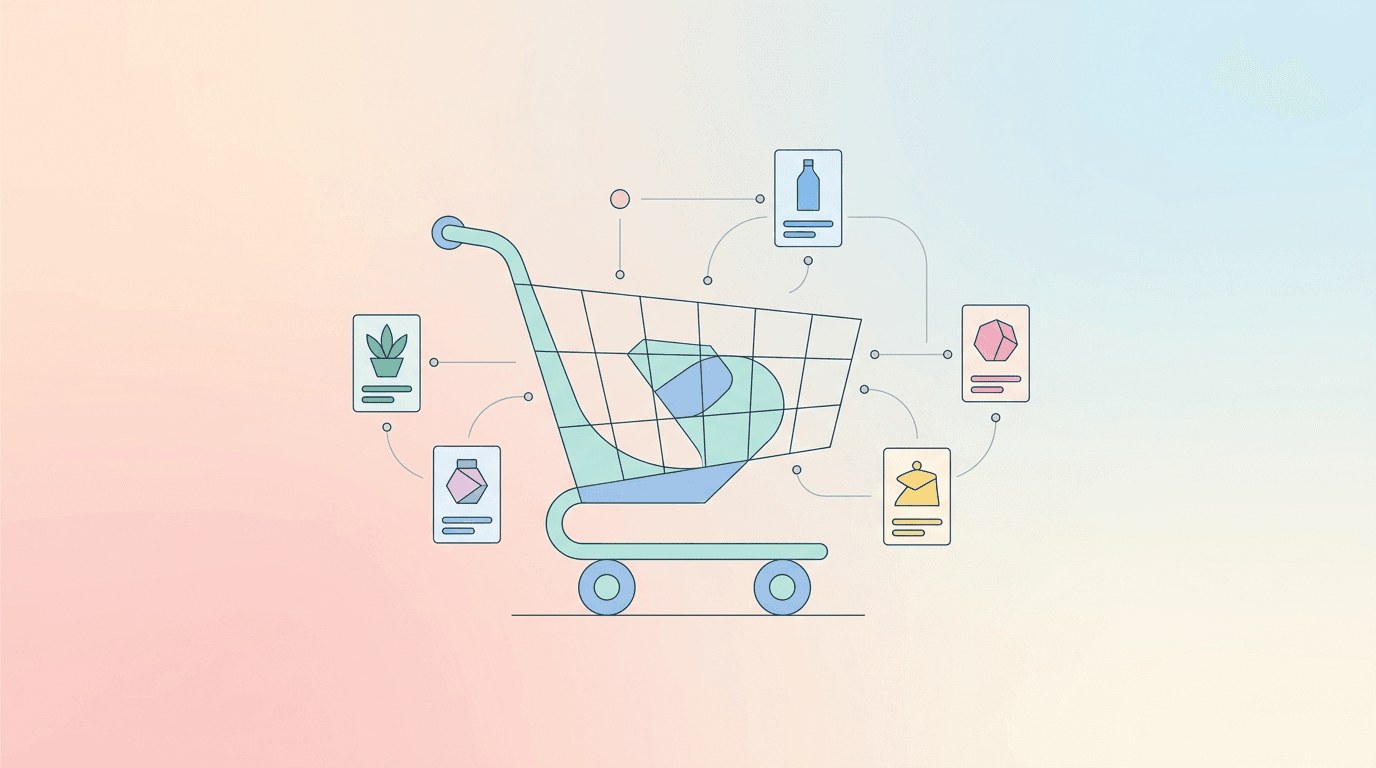
A practical framework for getting your products recommended when buyers ask ChatGPT, Gemini, and Perplexity what to buy.

A five-gap framework for reverse-engineering why ChatGPT, Perplexity, and Google's AI answers recommend your rivals — and a method to close the distance.

Three acronyms, one search box that is splitting into three. Here is what each discipline actually optimizes for — and how to decide where to spend your next hour.

The essential data on adoption, zero-click search, AI Overview citations, and why AI-referred traffic converts at a premium.

AI search sends fewer visitors than Google — and converts them up to 4.4x better. The 2026 benchmarks, by engine, and why it happens.

Gemini is three different surfaces with three different rules. Here is how to earn citations and brand mentions across all of them.

Google says you don't need to chunk your content. The GEO industry says you must. Here is what the evidence actually supports — and a simple test to get it right.

A framework for earning citations inside Perplexity's answer engine — where being fresh, verifiable, credible, and extractable beats ranking at position one.

AI recommends the brands it recognizes. Here is the three-signal framework that turns your company into an entity ChatGPT trusts enough to name.

AI search recommends your competitor but links to a G2 page, a Reddit thread, or a listicle you're not on. Off-page GEO is how you fix that.

Buyers now ask ChatGPT for the best tool instead of Googling it. Here is the SHELF framework for earning a spot on AI's recommendation shortlist.

Google AI Mode doesn't search for your keyword — it explodes one query into a dozen. Here's how to make your pages win that hidden multiplication.

Structured data helps ChatGPT and AI Overviews trust your page — but the 2026 data shows it is hygiene, not a magic citation switch.

The training-versus-retrieval distinction that decides whether ChatGPT, Perplexity, and Google cite your brand — plus a copy-paste robots.txt.

Reddit is the single most-cited source in AI answers. Here is how to earn a presence AI engines trust — without getting your brand banned.

A simple formula, engine-by-engine benchmarks, and a practical framework for growing your brand's presence in AI answers.

The major answer engines cite the same page only 4% of the time — here's the data and a framework for getting cited across all of them.

A repeatable, six-step method to measure whether ChatGPT, Gemini, and Perplexity actually recommend your brand — and a scorecard to track it over time.

Google now answers most searches before anyone clicks. Here is a data-backed, seven-step plan to win citations and recover the traffic AI Overviews are taking.

Keywords tell you what people type into a search box. Prompts tell you what your buyers actually ask an AI — and that is where the next decade of demand is being decided.

Why depth beats volume, how the pillar-cluster model works, and a scorecard to measure whether your site is actually an authority — or just a pile of posts.

ChatGPT, Perplexity and Gemini now send buyers to your site — but most of them hide inside "Direct." Here is the copy-paste setup that makes AI traffic visible.

Most teams adopt AI but never prove it pays off. Here is a four-layer framework that turns AI marketing into a defensible number your CFO will trust.
AI engines don't cite the most authoritative page. They cite the most extractable one. Here's the data-backed playbook for getting your brand into ChatGPT, Perplexity, and AI Overviews.

Three independent studies and Google's own documentation now agree: the file marketers were told to rush out has almost no effect on AI search visibility. Here is what to do instead.

Most brand-voice prompts fail because they describe your voice instead of showing it. Here's a reusable spec that fixes that.

A field guide to the seven tells that give machine-written content away — and the structural fix no humanizer tool can replicate.

Most teams have more analytics tools than ever — and less clarity than ever. Here's why attribution keeps failing, and what a smarter approach looks like.

Search is changing faster than most marketing teams realize. Here's what generative engine optimization actually means — and what to do about it.

Most companies can't afford five marketing specialists. An autonomous marketing team changes that equation — here's what it is, how it works, and how to stand one up.

Most marketing teams are stuck in a loop: create, post, repeat — with no system beneath it. Here's how to build one that compounds.

Automation follows rules. Agents pursue goals. The gap between them is wider than most marketers realize.

AI is becoming the operating leverage that lets two-person growth teams punch far above their weight.